Category: film
Short film: Sisyphus
Having shot tests and short films on a variety of cameras, it was interesting and reassuring to return to shooting a short film with a familiar camera: my Fujifilm X-Pro-1.
While this model is now supplanted by superior updates, I enjoy using this camera for its manageable size, simplicity of control and terrific image capture, which served me greatly when shooting with it before.
The project this time was “Sisyphus”, a short film about an endless quest, which I shot on green spaces near my home in south east London.
As a filmmaker, I’ve been very interested in writing and directing dialogue-free stories: it was enjoyable to build a story with just sound and vision, and excluding words.
If I were to do it again, I would aim to record better sound. The in-camera microphone caught a lot of wind distortion. While the camera has no socket for an external microphone, I could have recorded clean atmosphere tracks with my digital sound recorder.
Editing in iMovie was enjoyable. While I have the rudiments down on this tool, I’d like to experiment more with sound post-production on future projects.
According to Zanah Thirus’ excellent and informative microbudget indie filmmaker’s podcast, the most welcome compression for festivals is an H264 compressed MP4 file. Getting to this with iMovie was difficult: for some reason, when exporting, my settings button didn’t show. It was sheer luck that I clicked on a certain part of a grey area on the export window that brought up the menu I was after.
I’ve been editing some other videos; mainly test shoots and home recording, but in every shoot and edit I have aimed to learn something. Whatever the mistakes or learns in this, I enjoyed this production and look forward to my next.
Far away, so close!
I’ve spent some spare time watching TIVO’d editions of France 24’s daily arts programme, Encore.
As I watched its features on music, film books and exhibitions, I realised that this was the main arts programme that I enjoyed regularly, more than any other on television or radio. I also realised that I had come across more work from Black British creators, promoted with enthusiasm and clarity, on this show than I had from any arts programme from the UK.
Of course, there is much arts coverage on British media, but I wondered why, despite exclusives and features with some of my favourite creators, none of it had involved me in the way Encore has done.
Watching the recorded and online episodes, I felt that it was because Encore portrayed the arts as something attainable and part of everyday life; something reachable, as opposed to something to be consumed, made by someone special, touched by an incredible talent or genius; someone far away.
In the UK, the creative industries contribute £10 billion per year to the economy, yet the arts are looked on as a glorified hobby, practised by an out of touch elite, or dreamers who need to knuckle down and get a real job. It was telling that the UK government’s cyber campaign belittled a woman of colour’s career as a ballet dancer. And yet, articles abound on how much culture we are consuming on streaming platforms, in museums and with street art. Creativity is consumed, but not appreciated.
The Saatchi Gallery warehouse fire was joked about in the UK’s mainstream press. The Marble Arch Mound, while maybe mistaken in aspects of its execution, has been vilified in the media. Contrast this with with a ballet performance at a demonstration in Paris, or the Christo wrapping of the Arc de Triomphe: creativity appreciated and celebrated as part of everyone’s life.
Sometimes art touches the public in the UK, such as The Sultan’s Elephant or Little Amal’s walk, but these are seem to be outliers, rather than the norm, for art to be part of the public sphere.

I think of how my own attitude to art and creativity is part of this. I’ve done a lot of work in photography, drawing and filmmaking, and while I have found it hugely enjoyable, I have also found it difficult to take seriously. Accepting money for my work was at first tinged with guilt, because I enjoyed it so much. The idea of making a living from creativity is both hugely attractive and incredible, and I’ve had to do so much work on myself to focus on this goal, even now.
I think back to art lessons at school that I didn’t take seriously, even though I was obsessed by film, photography and costume: I couldn’t imagine that there was a link between what I was watching in the cinema, reading in magazines and seeing on television with what I was studying.
But then I think back even further to a childhood where I drew for enjoyment, where I built things for fun and made things for pleasure. All play. Did I look down on creativity, or was I made to look down on creativity, because it was just play? How could something that was so easy and so much fun be taken seriously?
I find it hard to think of a typically British film, or a film with a British, or even English look, without that film having to hark back to an imagined past. Francois Truffaut’s comment about British Cinema being a contradiction in terms comes to mind. Is there a British aesthetic, in the same way one can see a French or American “look” to a film? Does this spring from art as self expression not being taken seriously? Even in the US, creativity is taken seriously as a business. (British bass guitarist Pino Palladino, having to take daily Covid tests in order to work as a session musician in Los Angeles, acknowledged that his work was seen as essential to the economy and that it was “better than Britain telling you if you’re a musician or an artist you might have to look for a new job.”)
The path towards the arts in education becomes ever more narrow. Proposals to cut funding to “unprofitable” arts courses find sympathy with the current government. Students aiming for creative careers tend to be from backgrounds that can be relaxed about money or funding, leading to a homogeneity in practitioners. And with that practitioners’ similarity, a homogeneity in stories and worlds being depicted will follow.
I’m unsure how this can change, or whether it will change any time soon. At the moment, all I can see myself doing is creating, no matter what the circumstances: be it in work, unemployed, or in comfort. Create, create create, no matter what. And at some point, the arts in general may not seem so far away, but close.
A journal of the quiet months
I was very excited to get my newly developed negatives and scans back from Photofusion recently.
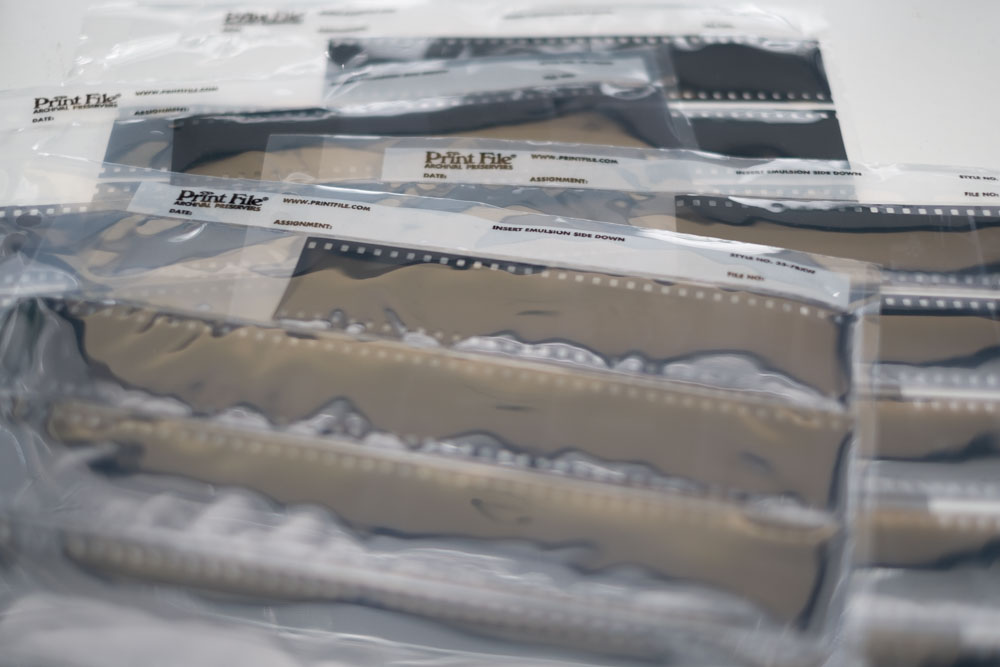
The black and white films had been developed then scanned at a low resolution by the same darkroom I spent a great many afternoons in developing prints. I miss those days.
The four rolls of film were donated and probably expired (they could have been up to 20 years old): indeed, one film was partially fogged; but the results were fascinating. I’m stunned by the look of the photos: raw and stark, with blazing whites and deep blacks; wispy skies and sharp details. I’ll definitely be shooting film again soon.

There is a palpable sense of place and time in the images, from our Christmas tree to a friend’s late summer birthday party: a journal from lockdown to a kind of liberty. Crowds don’t feature and most of the open spaces and pavements are empty, except for the odd family member. A lot of photos are from inside my home, with shots out of the windows.

The grainy black and white images have an archival quality: they look like “the past”, unlike the crisp, colourful digital images I normally take. These film images, with their imperfections in focus, exposure and composition seem to look more “alive”.

It’s been some years since I’ve been in a dark room, but I would love to see prints of a few of these photographs. I could still arrange with the developers at Photofusion to make prints of my favourite images, or I could compile my favourites in a digital picture book.

I’d like to try newer film of different varieties, be it colour or black & white, or print or transparency, in my various cameras. In the meantime, I’ll give serious thought to which prints I’ll make out of this particular batch.
One month off
A family holiday during August coincided with my completing work on a number of screenplay stages. I completed the first draft of one, a scene by scene outline of a second and a treatment for a third.
The holiday took me away from my computer and notebooks, so I found myself taking a break from all three projects for nearly a month. I returned to them with fresh eyes last month.
I’ve often baulked at the oft-given advice that one should put a newly-completed screenplay draft away for a month before reading over it: I wondered what one could do in the meantime, and satisfied myself with working on other projects.
On my return, I went straight into writing the first draft of my scene by scene outlined screenplay, while making notes on expanding the treatment. As to the first draft, I’ve started reading through it.

I knew that when writing it there were many problems with the story: it was misshapen; characters were under-developed; the story lacked drive. Only by going back to it and starting the rewriting process can any of these problems be solved. And only by being away from this draft for a month was I able to look at it with fresh eyes.
Screenplays all start somewhere and while my particular first draft needs a lot of work, it actually exists, and what needs to be worked on can now be seen. There may be a germ of a good idea in it, but unless that idea can be worked on, there’s little purpose to it.
Michaela Coel’s “I May Destroy You” went through 191 drafts. Jordan Peele’s “Get Out” went through 200 drafts. One of my favourite directors takes many years over his screenplays.
I hope to add a fourth screenplay project to the three screenplays I’m working on. Many new drafts need to follow in the months and years to come. As I write more and more drafts, I realise that writing well takes a great amount of time.
Dreaming in black & white
On being donated a few rolls of 35mm black & white film, I decided to run them through my Voigtlander rangefinder camera.
While taking photographs (and enjoying the immediate results) with my usual digital camera and new phone, I enjoyed the time spent on setting up photos with a film camera for images I will not see until they return from the (yet to be chosen) printers.

Its this time taken over that has been the most attractive thing about taking photographs on film again. A roll or two into this venture, while scanning a plethora of old transparencies, I thought both about the film images I took, developed and printed in the past, as well as the cameras I used to take them.
Towards the end of the recent photo podcast I took part in, we were asked about which photos we wanted to take in future. I said that I wanted to take more time over my images: slower, more considered photography, if you will. I thought about my medium format camera and how using it slowed down the whole process of image making. I thought about large format cameras and how precise one had to be in using them. I considered returning to previous digital images in order to refine them by taking better versions with improved compositions and lighting. In all, I thought about a photography beyond “snapping”.
This may lead to my taking fewer images, which may be a relief considering the many digital photos I’ve catalogued recently. The opportunity to really craft photos, for lighting, composition and subject, will develop my practice in extraordinary ways.
Realities
I’ve just completed a short film that I’d been working on for a few weeks.
“Realities” takes an idea from a science fiction feature screenplay I’m currently writing and imagines it in another setting. While I may not have brought complete clarity to the idea, I enjoyed making this short film and may rework aspects of the feature script as a result of making this.
Realities from Burning Details on Vimeo.
Two of my favourite aspects of this short film were building props and recording sound, the latter of which has been a problem in previous shoots. My next hope is to use more lighting, which I have also found difficult previously: short films offer great opportunities for experimentation.
Now “Realities” is complete, I’m going to make another short science fiction film, from a screenplay of about equal length. I have a few other ideas mulling around, as well as the opportunity to try some new editing platforms: I’ll see what new aspects I can bring to these productions.
Cracking it
Writing continues, with a treatment for a screenplay being worked on.
Normally I have rushed through this step, hoping to iron out any problems with the outline or scene by scene stage, but not this time. I have worked on the treatment for this story repeatedly before moving onto the next stage. I think I’ve cracked the story… almost.

At the moment, the story’s as good as I can get it. Improvements can only come with more details as I fill out scenes, develop more characters and and format supporting stories. It’s been a painstaking stage, but this process of building the story before before writing the screenplay has been enormously rewarding.
Thames Walk
I’ve been transferring my photographs from my website to my Behance profile, mainly because of the freedom I have to put together themed collections.
The most recent one I’ve made is for the river Thames, between Erith and Greenwich.


Living in south east London, I have visited most spots between these two points over the years, photographing them on film and digital. It’s good to see them all together.
My hope is to get bigger projects made, not just collecting photos around a theme, but making them also: travelogues, that unify place, point of view and style. But for now, I’ll be collecting place by place.
Celluloid Memories
In tandem with scanning old film transparencies, I have been taking photographs on some donated film for the first time in years.

The rolls are black and white print film, the type I roared through about ten years ago when I was printing as many images as I could at various dark rooms across the city.
As I work through the fourth roll, I realise that I won’t have the time to develop my own photos. Also, the usual labs that I went to for prints has now shut. There will be a search for a new lab to post these rolls to.
As I said, I am also scanning through a large amount of old transparencies, which I took roughly between 2005-2010. I am amazed at the quality of some shots and the latitude of tones and colours therein. Most have been on 35mm, but a fair amount have been on medium format film. These latter shots have been stunning to look at.
During the photography webinar I took part in with Wendy Catling and Dr. Natasha Barrett, the convenor Dr. Matt Finch asked us what we wanted to do next in photography. I said that I very much wanted to return to medium format photography, and even try large format photography at some point. Taking photos on film, and looking at the results, has made me very aware of wanting to take time over crafting a photograph in future.
Learning
Scriptwriting continues, with three screenplays at different stages. In each, I have learned a technique I will be definitely sticking to in future.
I completed the outline of one script today, which I’m very excited about. The story intrigues me and I want to tell it well. The next script is a rewrite, following a first round of feedback from beta readers. It should be a leaner, more focused rewrite. Lastly is a screenplay that I am currently writing from a completed outline, page by page.
Each screenplay, at their different stages, has taught me the importance of meticulous planning. As I write the screenplay pages from the outline, I find that I have not planned it well enough: my pages meander. The script rewrite planning is at treatment stage and the story needs to be completely ironed out before I start rewriting the screenplay itself.
The experience of these screenplays has seen me change my approach to writing. Normally, with an outline complete, I would go straight to writing the screenplay. Now, I want to go one planning stage further and write a scene by scene plan. Here, I can work out precisely what’s happening and where in the screenplay. I can also summarise how a scene is going to progress in itself.

My hope is that all this preparation will make the act of writing screenplays more focused: often, I have got lost in a scene, not knowing where the conflict is or where it fits into the wider story. The meticulous scene by scene plan, be it on a list or on index cards, can greatly assist on this.
In any case, I have learned this by writing scene plays day by day, page by page, scene by scene. The practice is making the process better, if not perfect.
 Burning Details
You must be logged in to post a comment.