Category: locality
Photo-zine number one
Since returning to the darkroom, I’ve been trying different methods to sharing my photography with others. I have used social media, home display, independent sales and art fairs, but I was wondering about a small, tangible way of sharing images. It was a social media post that introduced me to art zines and I was hooked.
The art zine examples in this post displayed prose, poetry and illustration. I’d seen zines from years before concerning football teams and music. More recently, I’d seen photography zines in small publications, which inspired me to do my own.
The simplest method I had seen showed the folding and cutting of a single A4 sheet of paper to make an eight page document.

Once made, I numbered the pages and set about collecting images.

I had wanted to feature the black and white 35mm images I had been printing and had been considering themes, when I realised that the majority of my photos had been of family or my local area, so I went with the theme and title, “Round My Way”: images of my locality.
I took the first eight images I liked, scanned them and sequenced them on an A4 document in Photopea. On first printing, I realised that I’d have to do some move-arounds, then reprinted. I did some titling and there it was.

Out of order…

In order…

…and complete!
At the moment I’m working through cutting them to size, folding and cutting. I’m definitely going to make more. There’ll be different techniques in themes, editing, formatting and printing, and even media, but this is a process that I am excited to continue.

Start to finish.
The walks, part two
The following day I trekked to Bostall Woods, where I shot some video in the forest. I tried to avoid shooting people there, mainly dog-walkers and ramblers, but caught a few of them, partially on camera and definitely on the soundtrack. Also on the soundtrack were tripod noises from the various camera moves I was attempting: definitely some practise and different equipment testing needed there.
I also returned to the river, this time near the Thames Barrier and surrounding warehouses. Some buildings were derelict: I wondered what would be in their place the next time I visited. These were areas that only cyclists and walkers could pass through.
As I carried the heavy photography equipment around the Thames path and surrounding neighbourhoods, I remembered the advice in a guide for wannabe Magnum Photographers: buy comfortable shoes. I’d like to visit more on foot and by bike in future.

Later I shot more video with one of my softbox lights. Following a YouTube tutorial, I tried techniques for video lighting that I hadn’t understood before: I enjoyed the results and will work on them with my own camera. There is still so much to learn.
On returning the equipment, it was a shock to use my mirrorless camera again: it felt light and manageable with familiar controls; almost like a toy. I will shoot with another rental next month; definitely a different camera, just to see how it works with videography and photography, and I’ll be one step closer to finding my regular videography camera.
Short film: Sisyphus
Having shot tests and short films on a variety of cameras, it was interesting and reassuring to return to shooting a short film with a familiar camera: my Fujifilm X-Pro-1.
While this model is now supplanted by superior updates, I enjoy using this camera for its manageable size, simplicity of control and terrific image capture, which served me greatly when shooting with it before.
The project this time was “Sisyphus”, a short film about an endless quest, which I shot on green spaces near my home in south east London.
As a filmmaker, I’ve been very interested in writing and directing dialogue-free stories: it was enjoyable to build a story with just sound and vision, and excluding words.
If I were to do it again, I would aim to record better sound. The in-camera microphone caught a lot of wind distortion. While the camera has no socket for an external microphone, I could have recorded clean atmosphere tracks with my digital sound recorder.
Editing in iMovie was enjoyable. While I have the rudiments down on this tool, I’d like to experiment more with sound post-production on future projects.
According to Zanah Thirus’ excellent and informative microbudget indie filmmaker’s podcast, the most welcome compression for festivals is an H264 compressed MP4 file. Getting to this with iMovie was difficult: for some reason, when exporting, my settings button didn’t show. It was sheer luck that I clicked on a certain part of a grey area on the export window that brought up the menu I was after.
I’ve been editing some other videos; mainly test shoots and home recording, but in every shoot and edit I have aimed to learn something. Whatever the mistakes or learns in this, I enjoyed this production and look forward to my next.
A journal of the quiet months
I was very excited to get my newly developed negatives and scans back from Photofusion recently.
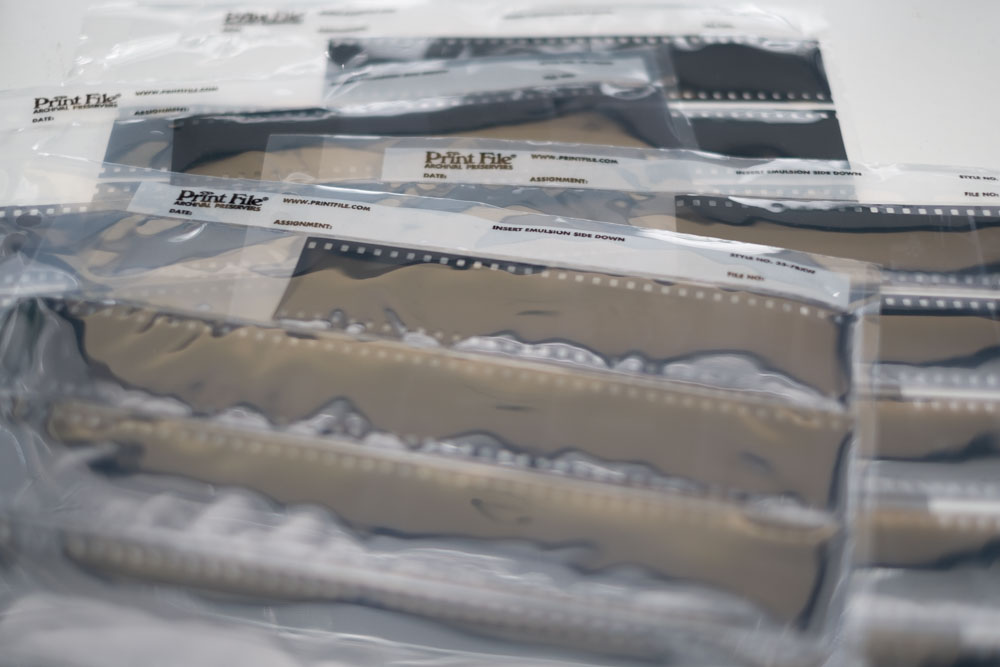
The black and white films had been developed then scanned at a low resolution by the same darkroom I spent a great many afternoons in developing prints. I miss those days.
The four rolls of film were donated and probably expired (they could have been up to 20 years old): indeed, one film was partially fogged; but the results were fascinating. I’m stunned by the look of the photos: raw and stark, with blazing whites and deep blacks; wispy skies and sharp details. I’ll definitely be shooting film again soon.

There is a palpable sense of place and time in the images, from our Christmas tree to a friend’s late summer birthday party: a journal from lockdown to a kind of liberty. Crowds don’t feature and most of the open spaces and pavements are empty, except for the odd family member. A lot of photos are from inside my home, with shots out of the windows.

The grainy black and white images have an archival quality: they look like “the past”, unlike the crisp, colourful digital images I normally take. These film images, with their imperfections in focus, exposure and composition seem to look more “alive”.

It’s been some years since I’ve been in a dark room, but I would love to see prints of a few of these photographs. I could still arrange with the developers at Photofusion to make prints of my favourite images, or I could compile my favourites in a digital picture book.

I’d like to try newer film of different varieties, be it colour or black & white, or print or transparency, in my various cameras. In the meantime, I’ll give serious thought to which prints I’ll make out of this particular batch.
Prints of the City
A few years ago on a walk along Baker Street, I snapped a photo with my phone camera of the sunlight in the morning mist. I was so surprised by the light that I returned the following day to photograph the sight and the light again with my Fuji X Pro-1.

Baker Street
During my computer cleanup, I came across this image again, along with a number of others I took in the Regent’s Park and Baker Street that morning. I loved their light, mist and timelessness, and the responses to them on my Instagram feed.
I took a number of photos of each shot: I put four of the better versions of the social media uploads together as prints, which I have placed on sale on my Etsy page. These image represent a look at London that I enjoy: showing a sight that could exist at any time in the past few decades, even with modern shop fronts, clothes and cars; a period view of the present.
London can be viewed in so many ways: as an historical city; as a financial city; as a place of politics and protest; as a place of culture. In my prints, I want to reflect all these different Londons and perhaps show new ones.
My Etsy print page is at: https://www.etsy.com/uk/shop/BurningDetails?ref=ss_profile
More landscapes
Landscape collation and creation continues, mostly around London’s green spaces:


The last, Charing Cross railway station, fascinates me: on certain days, the light and the backdrop really work well together. I will return…

Taking stock 2
I have been occasionally selling prints through Alamy and I’ve decided to upload more frequently to this site.
My previous contributions have been a haphazard selection from holiday photos, social gatherings and outings. Looking through them, my main fascination has been with change, especially with London’s ever-changing buildings and skyline.

The evolution of cities has always interested me, from how Manhattanite slums in the late 70s have become exclusive addresses, or how the deserted stretches of the abandoned Berlin wall have become bustling tourist destinations.


In addition to gathering and uploading my older images of London, I’m now taking as many photos of London spaces as I can manage, before the next big changes.
The Infinite City
Wherever I’ve travelled, I’ve always been most fascinated by cities.
I find them magical, vibrant and multi-layered. While most places have attractive aspects, cities lend themselves to exploration and experiment in a way I can’t find anywhere else: I feel conspicuous in the countryside; I can get lost in a city.
Despite spending most of my life in London, I find that I know very little of it. Happily, I have friends who are ready to explore it with me on photo walks, nature walks and bike rides. We go to places we know and places we’ve never been and we search out as much as we can.
One such recent case was with a cycling friend: “Let’s go east again,” she suggested, “Bermondsey.” Okay. We met at Waterloo and cycled east, past Blackfriars and Tower Bridge to Bermondsey. Then we continued on aimlessly, taking in anything that interested us.
 Here was a view from Bermondsey’s south bank of Tower Bridge and the City of London that we hadn’t seen before.
 The further we went along the undulating river Thames, the more our view of the city changed.
 Passing by St. Mary’s Church in Rotherhithe, we found the juxtaposition of a children’s play area and a graveyard. Somehow, it seemed quite touching.
 Continuing to the Docklands area we were amazed by the size and quiet of Greenland Quay. Practically derelict during the 1970s, it had been redeveloped into residential properties; the dock, formerly used for ships involved in the whaling and timber trades, is now used for recreational purposes and is one of only two functioning enclosed docks on the south bank of the Thames.
 An about turn revealed this seated grafitto under a road bridge: another work by Banksy?
 Our return home took us through one of London’s many green spaces: Russia Dock Woodland. I have an impossible dream of visiting all of London’s green spaces; impossible, because there are so many of them and so many more being developed. The woodland was developed by the infilling of the former Russia Dock: the park itself was long and narrow. This artificial hill photographed, Stave Hill, was created by using spoil (waste material and rubble) from the works to fill and landscape the areas formerly occupied by commercial docks.
It has a viewing platform on the top, but my friend and I didn’t ascend it, encumbered as we were with our bikes. But I’m sure we’ll return to take a view from the top across this infinite city.
Left to right
I am a big fan of taking photo walks. Getting lost somewhere new or familiar and taking a lot of photos with my camera is a great way to get to know an area; a good walk enhanced.
Occasionally, I may pass an area by car, bus or tube; a little too fast to take a considered photo. On buying a new camera recently, I decided to break it in by photographing one or two of these particular areas that I’d seen across London on something of an epic photo walk, which took me from west to east London.
I started near Westbourne Park, home of the Trellick Tower, designed by architect Erno Goldfinger. I’d heard a lot about this building; its prized flats and its grade II listed status, but I’d only seen it from afar.

Approaching the tube station nearby, I glanced across the road at the bus depot. I’d always been a big fan of large, cavernous spaces (possibly a hangover from seeing Ken Adams magnificent set designs, especially in the Bond movies). After asking permission from a couple of Transport for London operatives standing nearby (“No problem, mate: do what you want…”) I took an image.

Getting off at Edgware Road, I walked to a nearby park in the Paddington area. Despite an old friend living here for some years, I had hardly explored the area. Intrigued by a green expanse north of the A501 road, I walked to Paddington Green conservation area, where I was entranced by the entrance to the local Church of St. Mary. Nestled among the leaves, the bright sunlight dappled pleasantly over it.

Next, I wanted to look at some big ceilings. I had photographed Lord Foster‘s glass-roofed Great Court before, but I wanted to see how my camera’s 50mm lens would take it.

I also took this view of the columns at the entrance on my way out. I’ve always loved this classical architecture; my early drawings as a preteen were full of them, maybe from being a fan of the Thames television logo, or from early, half-remembered family journeys around London as a child. I’ll be attempting more views on return visits.

A short bus ride took me to King’s Cross railway station; particularly to the semi-circular departures concourse designed by John McAslan. Magnificent stuff, which my lens couldn’t really take in entirely. This view from Wikipedia does it more justice: I’ll return there sometime and try photographing it again.

The last part of the journey took me from north central to east London. I stopped at Mile End, where its attractive park straddles a bridge over the A11 road. I had previously taken a view of the Canary Wharf development, framed by the undulating park, but this was with a zoom lens at its longest end: not do-able here. I had to settle for this different view: the financial oasis, framed by local buildings.

Journey’s end came at Blackwall, in particular, the junction of the A13 East India Dock Road and the A12 Blackwall Tunnel Northern Approach. I find the hardened, industrial aspect to this area exciting and love photographing it. On a car journey, I remembered seeing an odd hoarding about lifestyles. Was it a trick of the light? No, it really was there: graffiti artist Banksy was up to his tricks again.

I quite liked juxtaposing it with a closer view of Canary Wharf: lavish lifestyles out of stock? Who’d have thought it?

Come on in…
I work in the Southwark area, for the second time in this particular job . I like this area, with Lower Marsh and the Tate Modern nearby, along with nice areas to walk all around.
The first time I worked here, I was advised about where to walk: stay out of pubs with flat roofs, I was warned; strange advice, but I took it in.
Maybe I was wrong. A pub nearby, the Lord Nelson, is a delight, with friendly staff and a charming, cluttered decor… and most recently, this delightful frieze.

Most welcoming!
 Burning Details

You must be logged in to post a comment.