Category: photography
A lasting poet
Apart from seeing a vinyl copy of his Forces of Victory long player, hearing his contributions to some historical documentaries and viewing the occasional performance on The Old Grey Whistle Test, I had not experienced Linton Kwesi Johnson’s dub poetry live until very recently.
His recent appearance at the South Bank’s B(old) festival was a delight, with archive footage, an on-stage interview with Robin Denselow and a signed live recital of his poetry. I was most touched by his first words: after a rapturous welcome, he immediately thanked the audience, those who supported him and the staff at the event; most gracious.


Mr. Johnson is the second living poet to have his work published in the Penguin Modern Classics series. I will get round to reading it soon: with current events, his poetry seems to have lost none of its relevance.

The Power of the Print
Some years ago, I was taught how to print black and white prints in a darkroom by the leader of our camera club. As I pulled my first complete print out of the fixing bath, he advised that I’d have to do about 200 prints before I knew what I was doing.
Over the next few years, I went past that amount in the gallery darkroom I’d been taught and in one of London’s communal darkrooms, printing images taken with SLRs and my preferred mirrorless 35mm cameras, along with the odd image taken with my medium format camera.
The time spent in the red-lit darkness was delightful: I’d get lost in print making and enjoy looking at the images I’d made on the tube journey home; the delayed gratification, of capturing, processing, developing and printing drawn out over days or weeks, added to the fun.
Until it didn’t. The allure of digital image capture, with its instant gratification of seeing precisely what one had photographed – even faster than a Polaroid – proved too attractive to ignore. I bought my first compact digital camera and used it with relish, along with my smartphone’s camera, supplanting both with my mirrorless digital camera which I use to this day.
I’ve since taken thousands of digital images, which currently reside on a number of portable hard drives. About half have been edited. Quite a few have been displayed online. None have been printed. Despite the time I’ve spent editing these images, despite the enjoyment I get from sharing these pictures with friends and the “likes” they get online and on social media, at times I feel that without being printed, these images don’t really exist. They feel ephemeral and fleeting, like superficial chatter.
Recently, I visited an exhibition space to enquire about exhibiting some images. As I was taken around the large space, the impact of a photographic print in such a space sank in. But it also sank in with my recent discovery of a plethora of family photos: envelope upon envelope of printed images; permanent representations of family life on celluloid and paper.
I’ve enjoyed sharing my photos and will continue to do so, but I shall be printing more in future. I want to see my images on walls and in albums and not just on screens.
More performance
On going through photos from recent years, I worked through a crop of images taken at South by South West in 2015.
These were taken with my Fujifilm X-Pro1: I was in full flow with this camera and took it everywhere with me. However I was shooting in jpeg format rather than RAW, so I couldn’t be too creative with image editing, which is probably just as well as I took hundreds of photos.
 Tove Styrke
 2:54
2:54
 Autre Ne Vert
 James Davis
 Miranda and the Diamonds: beautiful voice, but I was too far away!
I’ve been adding to this section periodically, putting in music and theatrical images where I find them. More than any other type of photography, this encourages me to get closer to the subject. More images can be found here.
Photographs Not Taken
One evening as I was walking from school towards Shepherd’s Bush tube station, I chanced by a number of singers walking in the opposite direction.
I recognised Jane Eugene of Loose Ends and Juliet Roberts of Working Week, with… was it Carol Kenyon? They were uniformly dressed in houndstooth trousers and black leather jackets: I imagined they had come from a photo session or video shoot.
I thought about asking to take their photo. In my schoolbag was my newly bought (and soon to be stolen) Pentax K1000. My first SLR and I were still getting acquainted: what an opportunity! But I was too shy to take advantage. I walked past the singers annoyed at myself.
Ten plus years later I was on my first solo trip to Paris. I spent the evening walking along the Champs Elysees taking photos with the Pentax’s replacement: a Chinon SLR. I sat at a bus stop to photograph an amusingly hoarded Louis Vuitton store when a people carrier pulled up in front of me.
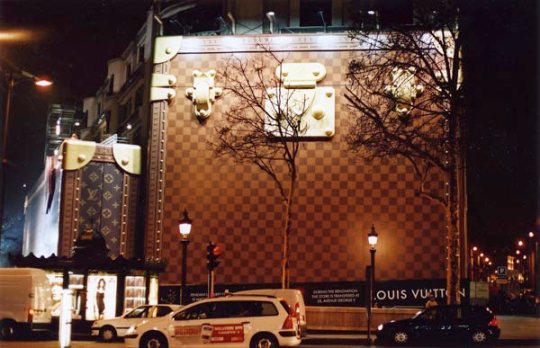
Out stepped the fashion designer Valentino and associates. This was special, but I lowered my camera: I didn’t want to take the photo.
I thought of these two brushes with celebrity while reading Photographs Not Taken, a collection of photographers’ essays, published in 2012, on photos they didn’t take. Reasons include reticence, discretion, fear, unloaded film and pure chance among others. Each essay is fascinating.

Among the stories about not taking photos are motivations for the images the photographers do make. Bearing witness to political events, representing the voiceless and discovering something new all feature, but in each case the photographers are driven to get the image that is important to them.
This made me think not only about the moments when I’ve decided against taking photos, but about what images I most want to take. The sense I got from the photographers’ essays was that they constantly got out of their comfort zone to take the images that were important to them, even though at times circumstances held them back. I don’t think I do that enough.
There’s a plethora of photographers in this book that I wish to learn more about. I’ll use their stories as an inspiration in my photographic journey – and I’ll get out of my comfort zone more in future along the way.
Collages
As part of the Dogwood photography challenge in 2017, I experimented with the Brenizer Method for the first time.
This method, otherwise known as Bokeh Panorama or Bokehrama, is a photographic technique that creates a digital image exhibiting a shallow depth of field in tandem with a wide angle of view. Using photo merging techniques, it was popularized by photographer Ryan Brenizer, and enables digital photographers to mimic the look of medium or large format film photography.
I’ve seen it used brilliantly in portraiture, and I hope to use it in my portraits soon, but my experimenting with it so far has taken in sculpture, landscape and architecture.

About six photos were used in this panorama from La Olivia, Fuertaventura.

This image of the Physical Energy sculpture by GF Watts was made up of about 30 images.
This link here has been the best guide for this technique. More images can be seen on my Behance page. As enjoyable as I’ve found building up these collages, I haven’t quite “got” the process. More playing and experimenting will follow.
It’s better to travel…
Over the years, I’ve visited many places: relatives in the West Indies; a camping trip around Europe; and cities, many cities.
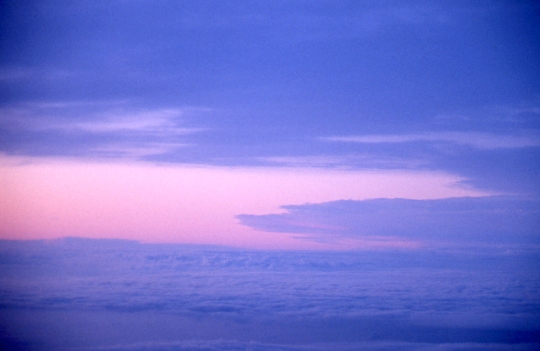 On the way to Berlin
I remember my first solo trips: working through cheap film in Tokyo and Hong Kong at the turn of the century; crossing to Paris by Eurostar; photographing a roll of film a day in Manhattan, and many visits to European cities with friends and loved ones.
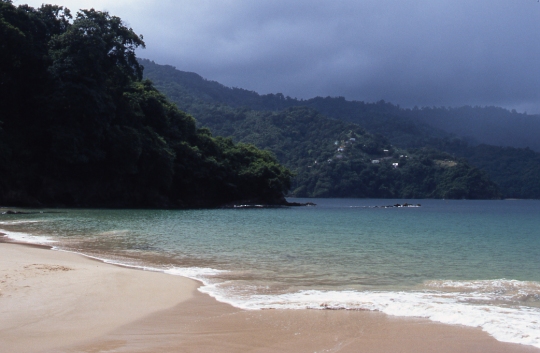 Pirate’s Bay, Tobago
The cheapness of Japanese film on my first visit to Tokyo in 2001 blew my mind. I subsequently photographed everything: people, architecture, overhead cables, even drains. My week-long exploration of Manhattan Island used ten rolls of film I acquired on eBay. I photographed as much as I could and now I’m reviewing them all.
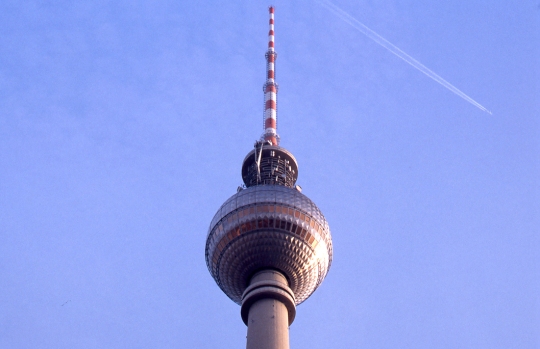 Fernsehturm (Television Tower), Berlin
I wonder about my attraction to cities. Maybe it’s their transitory nature – anyone can visit a city – that attracts me more than a rural setting (although I greatly enjoy visiting the countryside). There is a familiarity to a city in its roads, buildings and transport. There’s never complete uniformity, even in airports; there’s difference in the details, languages, food and attractions. Searching them out is a delight.
An interesting hoarding in Paris
Right now, I’m working through a plethora of digital and film travel images. I miss using film and thanks to a recently donated 35mm camera, I may experiment with a roll or two on a forthcoming holiday. The travel section will grow in the meantime.
It's better to travel…
Over the years, I’ve visited many places: relatives in the West Indies; a camping trip around Europe; and cities, many cities.
On the way to Berlin
I remember my first solo trips: working through cheap film in Tokyo and Hong Kong at the turn of the century; crossing to Paris by Eurostar; photographing a roll of film a day in Manhattan, and many visits to European cities with friends and loved ones.
Pirate’s Bay, Tobago
The cheapness of Japanese film on my first visit to Tokyo in 2001 blew my mind. I subsequently photographed everything: people, architecture, overhead cables, even drains. My week-long exploration of Manhattan Island used ten rolls of film I acquired on eBay. I photographed as much as I could and now I’m reviewing them all.
Fernsehturm (Television Tower), Berlin
I wonder about my attraction to cities. Maybe it’s their transitory nature – anyone can visit a city – that attracts me more than a rural setting (although I greatly enjoy visiting the countryside). There is a familiarity to a city in its roads, buildings and transport. There’s never complete uniformity, even in airports; there’s difference in the details, languages, food and attractions. Searching them out is a delight.
An interesting hoarding in Paris
Right now, I’m working through a plethora of digital and film travel images. I miss using film and thanks to a recently donated 35mm camera, I may experiment with a roll or two on a forthcoming holiday. The travel section will grow in the meantime.
Performance
Thanks to encouragement from some like-minded friends, I found myself attending a variety of live music events over the past few years. I took photos at most of them; as I organise my photography files, I’ve been posting a number of them on my website.
 A few SXSW out-takes: Meg Mac
The majority of images have been from the South by South-West festival in Austin, Texas, which I attended with friends in 2015. While editing the photos, I’ve been struck by the questions I ask myself to define an image’s quality: does the musician look dynamic? Is the image in focus? Does the performer look good?
 LANY
LANY
Actually, the last one is a touch dishonest: I only asked myself when the performer was a woman, and I was looking for the shots that made them look most attractive; treating the image as a fashion shoot rather than music photography, something I never did when the performer was a man. Back to the drawing board.
 Ibeyi
Ibeyi
In these images, and those I’ve made since, I’ve stuck to only the first two qualifiers: focus and dynamism. As I improve, I may change to dynamism and composition, or dynamism alone. Music is about expression: beautiful, angry, passionate, sad; and I want my music images to reflect all of that.
On landscapes
A large amount of my photography is of landscapes. I have images of nature in parks, rivers and valleys, but also of man-made landscapes depicting bridges, roads and architecture.


I wonder sometimes, considering the subjects depicted, if the only thing that could be described as “landscape” is the frame, but I think that landscape can apply to every feature in our cities, towns and open spaces.
Landscapes feature on my website and in my stock photography. As I upload more, I may differentiate between landscapes of nature, cities and streets, but for now I’ll continue building the section and interpreting the term.
Medium cool
I was given a twin lens reflex (TLR) camera by a friend in my camera club some years ago. She’d had it repaired, but no longer used it: I was flattered to receive it and used it alongside my 35mm and digital cameras.
Since unearthing eight rolls of undeveloped 120mm medium format film, I’ve been getting them developed at various printing shops. The resulting photographs depict travels, friends, architecture and the odd sculpture: I’ve been scanning the results and posting them on various platforms. It feels like the first time that I’ve really considered the images this camera can take.
In about half the images so far, mottling has appeared, maybe because of the amount of time between exposing and developing, or printing techniques, or mistakes on exposure. The single roll of transparency film contains none of this, which may point to more use if this in future, but the compositions and detail have been fascinating.

This image from downtown Austin, Texas during the South by South-West festival in 2015 shows such mottling. I love the detail nonetheless.

This is from the same festival (and I have no idea how I found myself on this rather exclusive-looking part of the stage). I’m not sure about the quality of this composition, but the focus on faces and stage architecture are appealing.

Kitsch? Cliched? Naff? Maybe, but I like this juxtaposition of a mocked-up Checkpoint Charlie and the McDonald’s restaurant from a trip to Berlin in 2015.

More mottling, sadly affecting this print of Charlottenburg Palace in Berlin on the same trip. I’ll return someday and take this again, probably on transparency film.
Other images I’ve yet to scan in show at times hurried shots, blurred focus and skewed compositions. The TLR is not a snapping camera, at least not without practice: consideration and time must be given to exposure, focus and composition, which can result in some glorious images.
While I continue to develop medium format films and add their images to my website, I see myself using this camera more often in future.
 Burning Details
You must be logged in to post a comment.