Category: writing
Screenplays
Following on from making a feature and some short films, I found myself wanting to return to the longer screenplay format.
I’m working on three speculative screenplays, all at different stages, and while working on them has had its difficulties, the process has been enjoyable so far.
Over the years, I have come across many screenwriting techniques, tips and instructions. At the moment, all I can vouch for is the techniques of writing every day: it has made the practise of writing less onerous; the sight of a completed, but unsatisfying screenplay that can be worked on is way more attractive than an unfinished script, abandoned due to its not achieving perfection in its first draft.

My technique (such as it is) is to write a little every day. I am currently planning one screenplay while writing another. I’d like to see how this progresses with more concurrent writing but for now, this will do.
A writing adventure

The finished product
It started with a tweet.

Earlier this year, Amaa_Official tweeted some advice to creatives on writing an instructive ebook. Her thread broke down the stages into manageable chunks, from choosing a subject, through writing, to presentation, sale and promotion.
I’ve written books before as part of the NaNoWriMo challenge, but I had never thought of doing something like this, so I set to thinking of a subject to write about. Of all the subjects I considered, I chose photography: an interest I’d pursued for years, in which I had wide experience with cameras, shooting and printing.
On looking through my photos, especially the digital images on my computer, I decided to focus on landscape photography. I thought about subjects to cover and the images needed to illustrate them and set to work, writing the ebook on Apple’s Pages and editing the photos in Adobe Photoshop. While doing this, I uploaded old landscape images of mine on social media, with posts trailing the forthcoming ebook.
A little over 5000 words later, with each of the ten chapters illustrated and formatted, I used Canva to make a cover design, adapting a free cover, which I then reduced in size using a trial of Adobe Acrobat. Once I’d placed it on my product page in Gumroad, I linked to the sales image on my social media.
I hesitate to finish with, “and that was all it took!” The process took months: page formatting was difficult; I agonised over the cover. But on the first day I launched the book, it began to sell.
This has been an extraordinary creative venture and one I’d like to repeat: I’m currently thinking of subjects to write on. Thanks to those who have bought the book so far, Amaa_Official, AlyssaColeLit and all those who tweet advice on ebook writing and promotion. Sharing this book has been a pleasure.
At this time
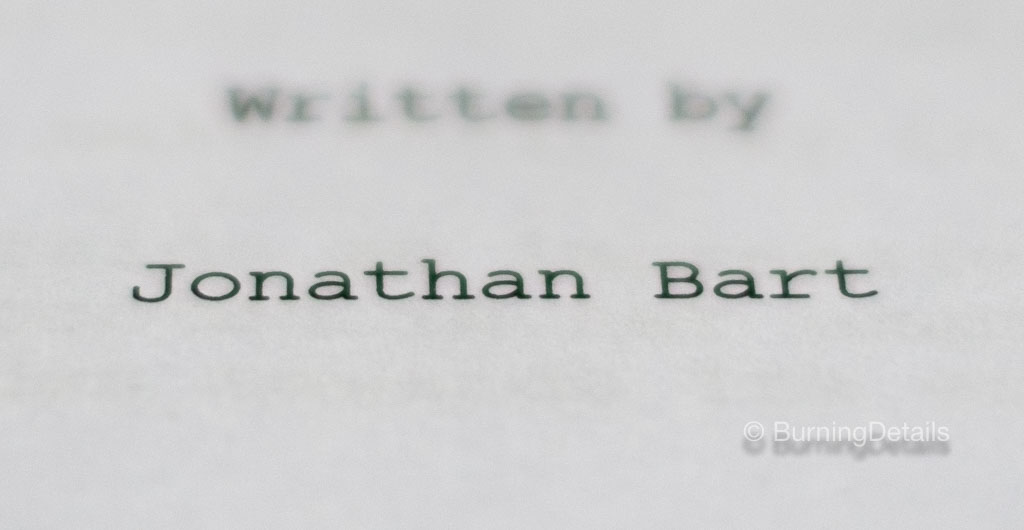
I completed a new screenplay draft this week. When discussing it with friends, I found that the first character note was written on it in 2015. As I wrote the draft’s concluding scenes, during this pandemic and struggles for racial justice (and the UK government’s woeful response to both), I wondered about the relevance of this screenplay to the current times.
The past few weeks have left me at a loss at what to do. I have demonstrated and donated to related causes, but I wonder about what to do when time has passed, the black squares on social media have faded and another issue arises before the next death occurs. And the next. What am I to read, write, photograph, film, draw? In the meantime, I continue to write planned screenplays, edit photographs and videos I’ve shot, and practice drawing.
My social media input, both for photographs and drawings, had dwindled to nothing while I spent my spare time following news on Black Lives Matter demonstrations and events. All the while I wondered as I wrote my prospective thriller whether it was too superficial to be working on: shouldn’t my work be engaging explicitly with these current events?
Two artists’ quotations came to mind. Nina Simone: “An artist’s duty… is to reflect the times.” Spike Lee: “I think the role that artists take is the role they choose.” I was unsure where I stood.
However, on proof-reading this draft, I felt that it was connected to current events, purely because of its completion during these current events. The mood, visuals and language that surrounds us seeps into our work. Creative work is always consumed through the filter of what surrounds the audience.
A crime movie or costume drama can be seen as commenting on contemporary events as much as the narrative events they depict: consider the Watergate parallels of the first two Godfather movies, or the comments on recent royal scandal in The Duchess.
As my script gets rewritten, it will continue to be influenced by the world around around its creation whether I like it or not. In time, hopefully, it will contribute in turn to the world that surrounds it.
The view from above

While a current screenplay draft is being read and evaluated, I realised that the worst thing I could do on a writing level was wait until I got feedback to continue writing. There are other screenplays to get on with, so I’ve begun to write them in the interim.
I’ve learned something with every screenplay I’ve written (which is why if I had my time again, I would have written a heck of a lot more by now). In writing my most recent story, by veering somewhat from the scene by scene outline I’d prepared, I learned that what appealed most to me was planning as much as possible before the actual writing began.
I’d definitely read about the value of planning from other writers: Bang2Write‘s blog frequently refers to this and Rachel Aaron‘s terrific blog entry on building her writing productivity is an inspiration, but I seemingly had to learn this for myself in my own practise.
The current screenplays I’m working on are a mixture of first drafts and page one rewrites. I’ve taken ideas, formed log lines and written synopses, which I’m currently building into longer treatments. It’s been a difficult, but fascinatingly useful process: I’ve seen stories that are misshapen, or need expanding, or just need finishing; the stories’ faults show up pretty quickly, as if they’re being viewed very clearly from above.
This can only be for the good: I’d rather find out what’s wrong with a story before I started writing its screenplay. There is another attraction: like Ms. Aaron, I want to plan scenes that I can’t wait to write, which hopefully will make screenplays one would delight in reading. Scene by scene outlines are next.
Files

I’ve spent the past fortnight gathering images for my guide to landscape photography ebook. In the process, I’ve found myself rifling through both physical and digital files for images to edit and use to illustrate it.
It’s been a long task: I’m working through two hard drives full of images, most filed by place and date. A large minority are not. At one point, I found a large file of untouched images. At another, I lost about a month’s worth in a mistaken purge (I imagine they’ll turn up again).
On the physical side, negatives, prints and slides taken over previous decades are in envelopes, files and folders and boxed within various crates in the loft. Their contents have been listed but not properly catalogued: finding particular prints and slides has been time consuming.
As the photos are collated and arrangements are made to take new images to complement them, I wonder what method of cataloging I can do in future to speed up such a process, or at least allow me better knowledge of what photographs I have? Definitely one to research in future.
Screenplay

I’ve just come to the end of drafting my screenplay: after a few revisions here and there, I’ll be sending it out to beta readers.
It’s been an enjoyable process and I’m looking forward to rewriting, especially because during this draft I came across a particular narrative line I didn’t plan for and want to explore further in future drafts.
In discovering this narrative, I had veered away from the scene by scene outline I’d put together: I wonder, without this outline providing a frame to work in, would I have been able to do so?
In any case, having an outline made this finding this plot line possible and when writing future drafts, I will put more effort into this stage. Having a detailed base to build from has been the most beneficial aspect of writing this screenplay.
On landscapes
Over the past few weeks, I have been taking and uploading a number of landscape photographs. Reasons for this are twofold: I have been photographing landscapes as a matter of course for a long while; and I have been writing a how-to ebook on landscape photography.
While I put the finishing touches to the ebook, I have also been putting up more landscape images from around London on social media.


Looking over the ebook’s ten chapters, I’ll be heeding the advice I give to take better landscape photos. I’ll be taking many more images. These images will be studied and in many cases discarded, but the photographs I make for display and print will be more considered, refined and hopefully a vast improvement on what has come before.
Screenplay
Earlier this month, I started work on a new screenplay that I hope to film in September.
Although I’ve written a number of screenplays, I feel that I’ve never quite “cracked” the process of screenwriting. I’ve ready many books on screenwriting technique, attended lectures on screenwriting and heeded the words of other screenwriters, but when I start a new screenplay, I always feel like I’m writing for the first time.
I’m currently reading through the Writer’s Guild of America West’s list of 101 Greatest Screenplays. The screenplays therein are a delight, but it’s important to remember that they are final drafts: written and rewritten many times to the enjoyable perfection I can read. Mistakes were made. At times they didn’t make sense. They all needed improvement prior to presentation.
I need to remember this as I write. The drafts I write can be critiqued and rethought, improved and polished, written and rewritten until their final presentation. That doesn’t call for any particular technique; it just calls for writing. Daily writing until that draft is finished, followed by consideration and rewriting, daily, until that draft has been finished. And so on.
It’s taken me so long to realise that excellence isn’t instant. It’s from constant effort and hard work; a full time job, in a way. This goes for writing, photography, filmmaking, drawing, indeed any creative or vocational pursuit. There’s no magic trick, just hard work.
I’ll be putting in this effort as I write this screenplay.
A lasting poet
Apart from seeing a vinyl copy of his Forces of Victory long player, hearing his contributions to some historical documentaries and viewing the occasional performance on The Old Grey Whistle Test, I had not experienced Linton Kwesi Johnson’s dub poetry live until very recently.
His recent appearance at the South Bank’s B(old) festival was a delight, with archive footage, an on-stage interview with Robin Denselow and a signed live recital of his poetry. I was most touched by his first words: after a rapturous welcome, he immediately thanked the audience, those who supported him and the staff at the event; most gracious.


Mr. Johnson is the second living poet to have his work published in the Penguin Modern Classics series. I will get round to reading it soon: with current events, his poetry seems to have lost none of its relevance.
Photographs Not Taken
One evening as I was walking from school towards Shepherd’s Bush tube station, I chanced by a number of singers walking in the opposite direction.
I recognised Jane Eugene of Loose Ends and Juliet Roberts of Working Week, with… was it Carol Kenyon? They were uniformly dressed in houndstooth trousers and black leather jackets: I imagined they had come from a photo session or video shoot.
I thought about asking to take their photo. In my schoolbag was my newly bought (and soon to be stolen) Pentax K1000. My first SLR and I were still getting acquainted: what an opportunity! But I was too shy to take advantage. I walked past the singers annoyed at myself.
Ten plus years later I was on my first solo trip to Paris. I spent the evening walking along the Champs Elysees taking photos with the Pentax’s replacement: a Chinon SLR. I sat at a bus stop to photograph an amusingly hoarded Louis Vuitton store when a people carrier pulled up in front of me.

Out stepped the fashion designer Valentino and associates. This was special, but I lowered my camera: I didn’t want to take the photo.
I thought of these two brushes with celebrity while reading Photographs Not Taken, a collection of photographers’ essays, published in 2012, on photos they didn’t take. Reasons include reticence, discretion, fear, unloaded film and pure chance among others. Each essay is fascinating.

Among the stories about not taking photos are motivations for the images the photographers do make. Bearing witness to political events, representing the voiceless and discovering something new all feature, but in each case the photographers are driven to get the image that is important to them.
This made me think not only about the moments when I’ve decided against taking photos, but about what images I most want to take. The sense I got from the photographers’ essays was that they constantly got out of their comfort zone to take the images that were important to them, even though at times circumstances held them back. I don’t think I do that enough.
There’s a plethora of photographers in this book that I wish to learn more about. I’ll use their stories as an inspiration in my photographic journey – and I’ll get out of my comfort zone more in future along the way.
 Burning Details
You must be logged in to post a comment.