Tagged: images
8x10s

On finishing the 5×7 test prints from my first folder of 35mm black and white negative film, I have started making larger 8×10 prints of the most striking tests. I have been making these on 8×10 inch sized paper.
The images are mainly from my locality, with which I hope to make a more ambitious photo zine than before, maybe A6 or A5 sized, but I won’t make any decisions until I’ve properly gathered all the images I want around a particular theme or sequence.
There are differences in method: after testing, I’m pretty certain of which filter grade I want to print with, which cuts time; but with a larger print I can do more dodging and burning to get what I want.
Now that I’ve learned to be less profligate when making test prints, I am making more large prints than before, especially in my second folder. Beyond the next photo zine, I’m not entirely sure of where these prints will end up, but it has been fun making them and watching the results develop.
Folder one
Last week, I completed the best 7×5 inch prints from my first ring bound folder of negatives since I returned to the darkroom late last year. That is: film processing; contact sheets; test prints; and best prints, using a sequence of techniques and choices to make prints that I aim to share in some fashion.
Starting back at the darkroom has been enormously enjoyable: I’ve learned so much and it’s been a pleasure to get to know my fellow darkroom practitioners. Making time for developing prints has been a luxury, but enormously fulfilling.

The contents of folder one are of different types of images (family, locality, architecture), of film emulsions and brands, of techniques in printing. I’ve changed enlargers at least once (from condensers to diffusers and back again). I’ve learned and relearned processes regarding print grading and will probably learn more in future. The films themselves aren’t in order: I decided that I would order them on the time they entered the darkroom for printing contact sheets for the first time; but roughly they stretch from just before lockdown to the years that followed, a weird hotchpotch of time that I’m unsure we’ve worked out the full impact of, even as we rush into the future.
I will continue using these new printing techniques into folder two. Folder three will have recently exposed negatives, And the cycle of making and learning will grow ever wider.
On witnessing and representation
Last week, I read an article by photographer Markéta Luskačová about photographing London’s east end markets over the 1970s, 1980s and 1990s. I was struck by a quotation at the end of her article by her fellow photographer Roger Mayne:
“The intention in mind must be to make a record and then an accident of having made the right record at the right time may produce ART”
I thought about this quotation when I considered my photography in the past. Without exception, it’s a representation of my life and surroundings, friends, family, work colleagues; a disorganised recording, in which I have found very little to describe as “art”. Sometimes, I’ve referred back to the odd image to show the passage of time, but I’ve found, much like my TikTok running videos, that I’ve often shot away from where change occurs.


Recently I have been more deliberate in my photography. I’ve been trying to shoot slower exposures to get deeper focus, even with a little motion blurring. Indeed, I’ve been (self) consciously trying to make “artistic” images; something beautiful out of my surroundings. But Mayne’s quotation made me reconsider this: what about recording the world around me as straightforwardly as possible?

I often think of Don McCullin advising nascent conflict photographers to shoot their surroundings rather than aim for far-off conflict zones.
“Young people often write me letters and ring me up, saying they want to do this or that, and the thing that most annoys me is when they say they want to be a war photographer. I say, OK, if you want to be a war photographer, go to the inner cities in England. You don’t have to get on a plane to the Middle East or wherever. There are social wars in our cities: homeless people, poor people, people begging outside of banks. You will find the most incredible poverty and that is a war as big as any other.”
I wonder if such observation would have seen Brexit coming, and how it would currently show the current flag-hanging in various neighbourhoods. I wonder if, like Ms. Luskačová, I should just wander up and down my neighbourhood with my camera and record anything that interests me.
The songwriter, performer and activist Nina Simone said that as an artist:
“I CHOOSE to reflect the times and situations in which I find myself. That, to me, is my duty.”
In this world, this city, these streets, there’s a lot to reflect on. Back to work.
Taking stock 3
Some time ago, I saw a photo of mine on the Guardian website. It was a photo I’d taken in the BFI cinema some years previously that I had uploaded to a stock photo site. There it was: my photo, my name and (when I checked the photo stock website) my payment.
While a pleasant surprise, it was a rare occurence. I’ve sold occasionally on stock sites, but not enough and I had recently started deleting images in order to concentrate my imaging elsewhere, until I came across a social media post about such photography.
I hadn’t considered the type of photography I wanted to share and I hadn’t considered the type of photographer I was, but this post made me think about all this. It also made me think about what type of images I was uploading: snapshots rather than planned shoots; individual images rather than themed sequences. So I’m giving stock photography another go.

This is from my most recent set of photos: delivery bikers in the rain. They are part of our cities, as much as taxis, public transport and pedestrians; certainly during and since lockdown they’ve become even more prevalent. Sometimes maligned, but often used: I wanted to show them in my photography.
More images can be found here. And more will follow.
Photo-zine number one
Since returning to the darkroom, I’ve been trying different methods to sharing my photography with others. I have used social media, home display, independent sales and art fairs, but I was wondering about a small, tangible way of sharing images. It was a social media post that introduced me to art zines and I was hooked.
The art zine examples in this post displayed prose, poetry and illustration. I’d seen zines from years before concerning football teams and music. More recently, I’d seen photography zines in small publications, which inspired me to do my own.
The simplest method I had seen showed the folding and cutting of a single A4 sheet of paper to make an eight page document.

Once made, I numbered the pages and set about collecting images.

I had wanted to feature the black and white 35mm images I had been printing and had been considering themes, when I realised that the majority of my photos had been of family or my local area, so I went with the theme and title, “Round My Way”: images of my locality.
I took the first eight images I liked, scanned them and sequenced them on an A4 document in Photopea. On first printing, I realised that I’d have to do some move-arounds, then reprinted. I did some titling and there it was.

Out of order…

In order…

…and complete!
At the moment I’m working through cutting them to size, folding and cutting. I’m definitely going to make more. There’ll be different techniques in themes, editing, formatting and printing, and even media, but this is a process that I am excited to continue.

Start to finish.
Portraits: Christmas Lights
My experience with street photography is limited. I like taking street scenes, but I find it difficult to take a portrait of a passer-by. I feel like I have intruded on the subject’s personal space: the few I’ve taken I’ve been loathe to display.
That said, I do love some photographers’ street portraits and I think that I should attempt to take more in my own style. Plucking up the courage to ask someone’s permission to do so would be the first step.
This was the step I took with this portrait. I was with my camera group, taking photos of the West End’s Christmas lights, when I came across this young woman smoking a cigarette. There was something about her calm, away from the busy-ness of the shopping area that surrounded her, that was fascinating so I asked if I could take her photo.
She said yes: I took a few exposures as quickly as I could before thanking her and leaving her to her cigarette.

Looking back, I wish I got this woman’s contact information to send her the final image. It was a pointer to how I could go about street portraiture in future.
While I realised that the street lighting on her face wasn’t satisfactory, an aspect that struck about this image was the woman’s relationship with her surroundings. This made me very interested in environmental portraits, elements of which I’ve tried to bring into my portraiture since.
A journal of the quiet months
I was very excited to get my newly developed negatives and scans back from Photofusion recently.
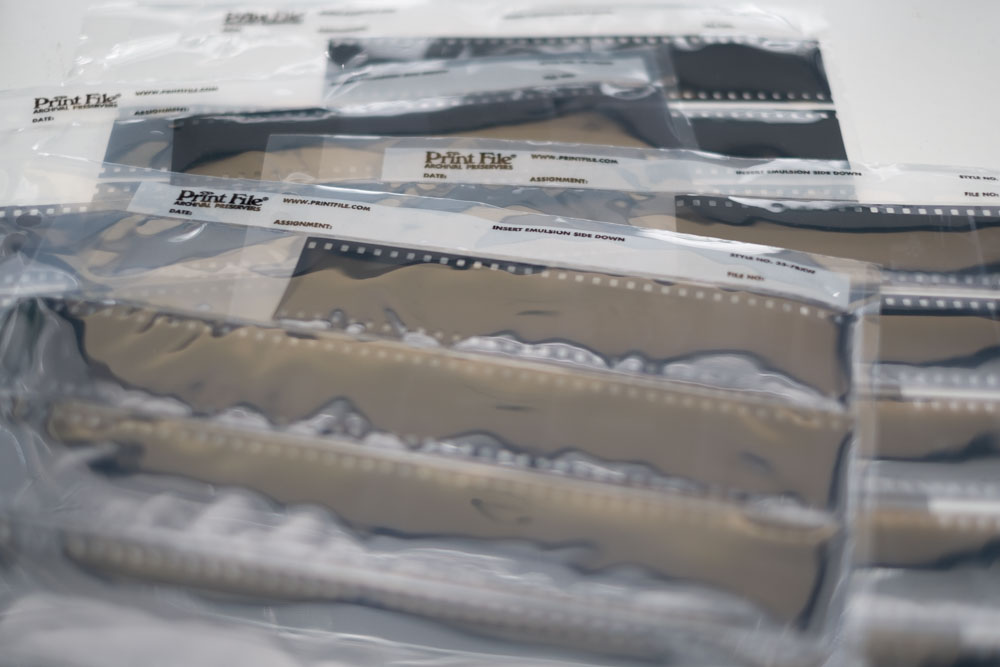
The black and white films had been developed then scanned at a low resolution by the same darkroom I spent a great many afternoons in developing prints. I miss those days.
The four rolls of film were donated and probably expired (they could have been up to 20 years old): indeed, one film was partially fogged; but the results were fascinating. I’m stunned by the look of the photos: raw and stark, with blazing whites and deep blacks; wispy skies and sharp details. I’ll definitely be shooting film again soon.

There is a palpable sense of place and time in the images, from our Christmas tree to a friend’s late summer birthday party: a journal from lockdown to a kind of liberty. Crowds don’t feature and most of the open spaces and pavements are empty, except for the odd family member. A lot of photos are from inside my home, with shots out of the windows.

The grainy black and white images have an archival quality: they look like “the past”, unlike the crisp, colourful digital images I normally take. These film images, with their imperfections in focus, exposure and composition seem to look more “alive”.

It’s been some years since I’ve been in a dark room, but I would love to see prints of a few of these photographs. I could still arrange with the developers at Photofusion to make prints of my favourite images, or I could compile my favourites in a digital picture book.

I’d like to try newer film of different varieties, be it colour or black & white, or print or transparency, in my various cameras. In the meantime, I’ll give serious thought to which prints I’ll make out of this particular batch.
Dreaming in black & white
On being donated a few rolls of 35mm black & white film, I decided to run them through my Voigtlander rangefinder camera.
While taking photographs (and enjoying the immediate results) with my usual digital camera and new phone, I enjoyed the time spent on setting up photos with a film camera for images I will not see until they return from the (yet to be chosen) printers.

Its this time taken over that has been the most attractive thing about taking photographs on film again. A roll or two into this venture, while scanning a plethora of old transparencies, I thought both about the film images I took, developed and printed in the past, as well as the cameras I used to take them.
Towards the end of the recent photo podcast I took part in, we were asked about which photos we wanted to take in future. I said that I wanted to take more time over my images: slower, more considered photography, if you will. I thought about my medium format camera and how using it slowed down the whole process of image making. I thought about large format cameras and how precise one had to be in using them. I considered returning to previous digital images in order to refine them by taking better versions with improved compositions and lighting. In all, I thought about a photography beyond “snapping”.
This may lead to my taking fewer images, which may be a relief considering the many digital photos I’ve catalogued recently. The opportunity to really craft photos, for lighting, composition and subject, will develop my practice in extraordinary ways.
The Outer Limits
On a filmmaking course at Raindance, the lecturer Elliot Grove talked of the abilities of the equipments that we could get our hands on to make our films.
He talked of instruction manuals and encouraged us to read and test our equipment by them. Then he stated an extraordinary fact: the instruction manuals did cover a lot of what the equipment was capable of, but not everything. The cameras, sound mixers and editing platforms we would use could do up to 50 per cent more than these manuals were letting on, and we would be well-advised to experiment with these as much as possible.

A musician friend once told me of the myriad ways he could work with a newly acquired mixing software package. I paralleled this with my photo editing gear: with so many features, how could one know exactly what to use in one’s work? Experiment, he answered.
Acquaintances introducing me to photo editing software talked of their experimentation: slowly working through all the features and finding out what worked best for them. I’ve continued doing so, and I think that my digital darkroom skills have improved as I’ve done so.
With my cameras, I continue to work my way through instruction manuals for years-old equipment. There always seems to be something new to discover. I find it hard to imagine buying more equipment if I haven’t reached the limits of what I’m currently using, be they a still camera, a handycam or a phone camera. “Better” photography could result as much to skilful use as well as better equipment.
In his terrific book Digital Film-Making, director Mike Figgis talks of using a camera often enough so that it becomes an extension of your hand, like a pen or a paintbrush. I love this approach. The idea of really knowing a piece of equipment and taking it to the limits of its capabilities is far more appealing to having a new piece of kit.
Portfolio
After using Adobe’s photography editing products, particularly Photoshop and Lightroom, I’ve been uploading selected images onto their Behance platform.
Behance is a portfolio site, where creatives can upload projects containing photography, video, graphic design, product design or any form of artwork to enhance their profile.
I’ve enjoyed using it so far because it’s enabled me to collate completed projects, like photo stories or studies of a particular subject, in a way that gives me more control than any other platform I’ve used.


While it seems I can only use Behance as long as I’m paying for Adobe’s products, this isn’t too onerous: I’ll be working with Photoshop and Lightroom for a while yet.
My Behance profile can be found here.
 Burning Details
You must be logged in to post a comment.