Tagged: London
On witnessing and representation
Last week, I read an article by photographer Markéta Luskačová about photographing London’s east end markets over the 1970s, 1980s and 1990s. I was struck by a quotation at the end of her article by her fellow photographer Roger Mayne:
“The intention in mind must be to make a record and then an accident of having made the right record at the right time may produce ART”
I thought about this quotation when I considered my photography in the past. Without exception, it’s a representation of my life and surroundings, friends, family, work colleagues; a disorganised recording, in which I have found very little to describe as “art”. Sometimes, I’ve referred back to the odd image to show the passage of time, but I’ve found, much like my TikTok running videos, that I’ve often shot away from where change occurs.


Recently I have been more deliberate in my photography. I’ve been trying to shoot slower exposures to get deeper focus, even with a little motion blurring. Indeed, I’ve been (self) consciously trying to make “artistic” images; something beautiful out of my surroundings. But Mayne’s quotation made me reconsider this: what about recording the world around me as straightforwardly as possible?

I often think of Don McCullin advising nascent conflict photographers to shoot their surroundings rather than aim for far-off conflict zones.
“Young people often write me letters and ring me up, saying they want to do this or that, and the thing that most annoys me is when they say they want to be a war photographer. I say, OK, if you want to be a war photographer, go to the inner cities in England. You don’t have to get on a plane to the Middle East or wherever. There are social wars in our cities: homeless people, poor people, people begging outside of banks. You will find the most incredible poverty and that is a war as big as any other.”
I wonder if such observation would have seen Brexit coming, and how it would currently show the current flag-hanging in various neighbourhoods. I wonder if, like Ms. Luskačová, I should just wander up and down my neighbourhood with my camera and record anything that interests me.
The songwriter, performer and activist Nina Simone said that as an artist:
“I CHOOSE to reflect the times and situations in which I find myself. That, to me, is my duty.”
In this world, this city, these streets, there’s a lot to reflect on. Back to work.
Taking stock 3
Some time ago, I saw a photo of mine on the Guardian website. It was a photo I’d taken in the BFI cinema some years previously that I had uploaded to a stock photo site. There it was: my photo, my name and (when I checked the photo stock website) my payment.
While a pleasant surprise, it was a rare occurence. I’ve sold occasionally on stock sites, but not enough and I had recently started deleting images in order to concentrate my imaging elsewhere, until I came across a social media post about such photography.
I hadn’t considered the type of photography I wanted to share and I hadn’t considered the type of photographer I was, but this post made me think about all this. It also made me think about what type of images I was uploading: snapshots rather than planned shoots; individual images rather than themed sequences. So I’m giving stock photography another go.

This is from my most recent set of photos: delivery bikers in the rain. They are part of our cities, as much as taxis, public transport and pedestrians; certainly during and since lockdown they’ve become even more prevalent. Sometimes maligned, but often used: I wanted to show them in my photography.
More images can be found here. And more will follow.
Photo-zine number one
Since returning to the darkroom, I’ve been trying different methods to sharing my photography with others. I have used social media, home display, independent sales and art fairs, but I was wondering about a small, tangible way of sharing images. It was a social media post that introduced me to art zines and I was hooked.
The art zine examples in this post displayed prose, poetry and illustration. I’d seen zines from years before concerning football teams and music. More recently, I’d seen photography zines in small publications, which inspired me to do my own.
The simplest method I had seen showed the folding and cutting of a single A4 sheet of paper to make an eight page document.

Once made, I numbered the pages and set about collecting images.

I had wanted to feature the black and white 35mm images I had been printing and had been considering themes, when I realised that the majority of my photos had been of family or my local area, so I went with the theme and title, “Round My Way”: images of my locality.
I took the first eight images I liked, scanned them and sequenced them on an A4 document in Photopea. On first printing, I realised that I’d have to do some move-arounds, then reprinted. I did some titling and there it was.

Out of order…

In order…

…and complete!
At the moment I’m working through cutting them to size, folding and cutting. I’m definitely going to make more. There’ll be different techniques in themes, editing, formatting and printing, and even media, but this is a process that I am excited to continue.

Start to finish.
The walks, part two
The following day I trekked to Bostall Woods, where I shot some video in the forest. I tried to avoid shooting people there, mainly dog-walkers and ramblers, but caught a few of them, partially on camera and definitely on the soundtrack. Also on the soundtrack were tripod noises from the various camera moves I was attempting: definitely some practise and different equipment testing needed there.
I also returned to the river, this time near the Thames Barrier and surrounding warehouses. Some buildings were derelict: I wondered what would be in their place the next time I visited. These were areas that only cyclists and walkers could pass through.
As I carried the heavy photography equipment around the Thames path and surrounding neighbourhoods, I remembered the advice in a guide for wannabe Magnum Photographers: buy comfortable shoes. I’d like to visit more on foot and by bike in future.

Later I shot more video with one of my softbox lights. Following a YouTube tutorial, I tried techniques for video lighting that I hadn’t understood before: I enjoyed the results and will work on them with my own camera. There is still so much to learn.
On returning the equipment, it was a shock to use my mirrorless camera again: it felt light and manageable with familiar controls; almost like a toy. I will shoot with another rental next month; definitely a different camera, just to see how it works with videography and photography, and I’ll be one step closer to finding my regular videography camera.
The walks, part one
A few weekends ago, I did some test shooting with a new camera. Following a digital videographer’s advice, I rented a Canon 5D DSLR, with a microphone, tripod and a 50mm lens.
Having shot for over ten years with mirrorless film and digital cameras, the DSLR was a beast: big and heavy, the camera intimidated me from the moment I took it out of the box. Sat on a bench near the Leadenhall building, I tried taking my first picture: one of the skyscrapers nearby. A few mistakes later, I got it.


My aim was to go to the Royal Exchange, because it tended to be pretty deserted on a weekend. This Saturday, however, it was hosting a thousands strong march for the environment. A number of photographers and videographers were documenting the event, but I decided to duck out until I had an at least rudimentary knowledge of this camera.

Once at home, I transferred the camera to a case of my own and headed out to shoot some video at the Woolwich riverside. From there, I shot tests at a railway crossing in Charlton and on the South Bank.

What struck me on this excursion was what I saw as I walked between and around these sights, looking for something to photograph. I’ve been on photo walks before, both with friends and by myself, but I was really fascinated by the things I didn’t see when I had driven or taken public transport past them many times before.
Building, shops and accommodation I had barely glanced at before were there in all their detail. Different neighbourhoods with their residents and visitors. Different topography and sounds. As I walked, I thought about the photographer Don McCullin’s advise to photographers who wanted be war photographers:
“I say, OK, if you want to be a war photographer, go to the inner cities in England. You don’t have to get on a plane to the Middle East or wherever. There are social wars in our cities: homeless people, poor people, people begging outside of banks. You will find the most incredible poverty and that is a war as big as any other.”
While I didn’t feel as if I were documenting any kind of war, I did feel like I was walking through parts of the city that were ignored: the alleyways and neighbourhoods considered not pretty enough for an Instagram story; the people I may avoid, or who may avoid me; the unobserved. I wondered what I’d learn if I visited these areas more rather than just passing them by.
I finished the my first day shooting video on Waterloo Bridge and the South Bank, before bringing the gear back home.
Portraits: Christmas Lights
My experience with street photography is limited. I like taking street scenes, but I find it difficult to take a portrait of a passer-by. I feel like I have intruded on the subject’s personal space: the few I’ve taken I’ve been loathe to display.
That said, I do love some photographers’ street portraits and I think that I should attempt to take more in my own style. Plucking up the courage to ask someone’s permission to do so would be the first step.
This was the step I took with this portrait. I was with my camera group, taking photos of the West End’s Christmas lights, when I came across this young woman smoking a cigarette. There was something about her calm, away from the busy-ness of the shopping area that surrounded her, that was fascinating so I asked if I could take her photo.
She said yes: I took a few exposures as quickly as I could before thanking her and leaving her to her cigarette.

Looking back, I wish I got this woman’s contact information to send her the final image. It was a pointer to how I could go about street portraiture in future.
While I realised that the street lighting on her face wasn’t satisfactory, an aspect that struck about this image was the woman’s relationship with her surroundings. This made me very interested in environmental portraits, elements of which I’ve tried to bring into my portraiture since.
A journal of the quiet months
I was very excited to get my newly developed negatives and scans back from Photofusion recently.
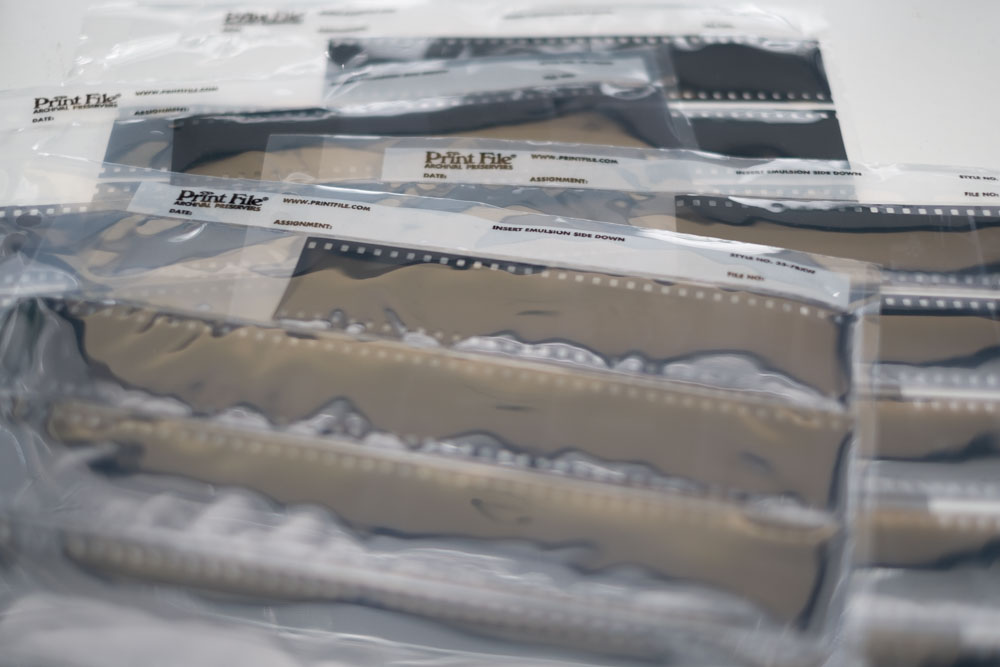
The black and white films had been developed then scanned at a low resolution by the same darkroom I spent a great many afternoons in developing prints. I miss those days.
The four rolls of film were donated and probably expired (they could have been up to 20 years old): indeed, one film was partially fogged; but the results were fascinating. I’m stunned by the look of the photos: raw and stark, with blazing whites and deep blacks; wispy skies and sharp details. I’ll definitely be shooting film again soon.

There is a palpable sense of place and time in the images, from our Christmas tree to a friend’s late summer birthday party: a journal from lockdown to a kind of liberty. Crowds don’t feature and most of the open spaces and pavements are empty, except for the odd family member. A lot of photos are from inside my home, with shots out of the windows.

The grainy black and white images have an archival quality: they look like “the past”, unlike the crisp, colourful digital images I normally take. These film images, with their imperfections in focus, exposure and composition seem to look more “alive”.

It’s been some years since I’ve been in a dark room, but I would love to see prints of a few of these photographs. I could still arrange with the developers at Photofusion to make prints of my favourite images, or I could compile my favourites in a digital picture book.

I’d like to try newer film of different varieties, be it colour or black & white, or print or transparency, in my various cameras. In the meantime, I’ll give serious thought to which prints I’ll make out of this particular batch.
Prints of the City
A few years ago on a walk along Baker Street, I snapped a photo with my phone camera of the sunlight in the morning mist. I was so surprised by the light that I returned the following day to photograph the sight and the light again with my Fuji X Pro-1.

Baker Street
During my computer cleanup, I came across this image again, along with a number of others I took in the Regent’s Park and Baker Street that morning. I loved their light, mist and timelessness, and the responses to them on my Instagram feed.
I took a number of photos of each shot: I put four of the better versions of the social media uploads together as prints, which I have placed on sale on my Etsy page. These image represent a look at London that I enjoy: showing a sight that could exist at any time in the past few decades, even with modern shop fronts, clothes and cars; a period view of the present.
London can be viewed in so many ways: as an historical city; as a financial city; as a place of politics and protest; as a place of culture. In my prints, I want to reflect all these different Londons and perhaps show new ones.
My Etsy print page is at: https://www.etsy.com/uk/shop/BurningDetails?ref=ss_profile
My City, Our World

Earlier this week, I visited central London to take the last new image for my urban landscape photography ebook. Now, I’m social distancing as directed and as I look at the images I took, I’m shocked at how deserted the city looks.
Pavements are empty, traffic is sparse, shops are quiet. This city has changed.
As this pandemic runs its course, the changes will remain in place for some time. I’m full of questions. I wonder how photography will capture this changed city: in the expressions of its inhabitants; in the state of its high streets; or in its service workers?
Right now, there is speculation that London may be locked down. How will this be recorded? Will there be a definitive image?
In addition to staying safely distanced, I will be photographing as much as I can. I want to record this time. I wonder how others will do this? We shall see.
On landscapes
Over the past few weeks, I have been taking and uploading a number of landscape photographs. Reasons for this are twofold: I have been photographing landscapes as a matter of course for a long while; and I have been writing a how-to ebook on landscape photography.
While I put the finishing touches to the ebook, I have also been putting up more landscape images from around London on social media.


Looking over the ebook’s ten chapters, I’ll be heeding the advice I give to take better landscape photos. I’ll be taking many more images. These images will be studied and in many cases discarded, but the photographs I make for display and print will be more considered, refined and hopefully a vast improvement on what has come before.
 Burning Details
You must be logged in to post a comment.